


Software Ecosystem
The XRP Ledger is home to a deep, layered ecosystem of software projects powering and enabling an Internet of Value. It's impossible to list every project, tool, and business that interacts with the XRP Ledger, so this page only lists a few categories and highlights some central projects that are documented on this website.
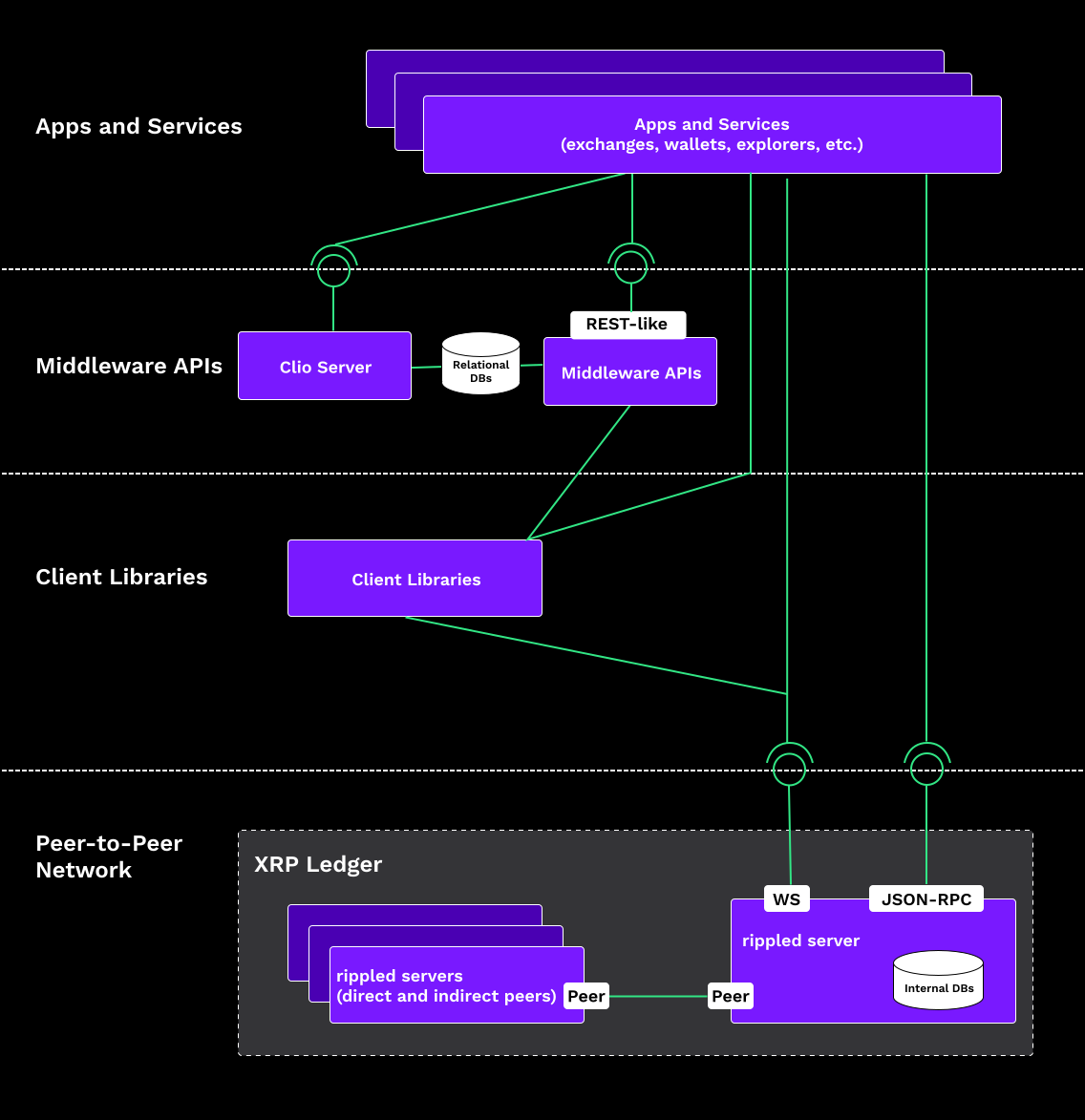
Stack Levels
- Core Servers form the basis of the XRP Ledger, a peer-to-peer network relaying and processing transactions at all times.
- Client Libraries exist in higher level software, where they are imported directly into program code, and contain methods to access the XRP Ledger.
- Middleware provides indirect access to XRP Ledger data. Applications in this layer often have their own data storage and processing.
- Apps and Services provide user-level interaction with the XRP Ledger, or provide a basis for even higher-level apps and services.
Core Servers
The peer-to-peer network at the heart of the XRP Ledger requires a highly-reliable, efficient server to enforce the rules of consensus and transaction processing. The XRP Ledger Foundation publishes a reference implementation of this server software, called rippled (pronounced "ripple-dee"). The server is available under a permissive open-source license, so anyone can inspect and modify their own instance of the server, and re-publish with few restrictions.
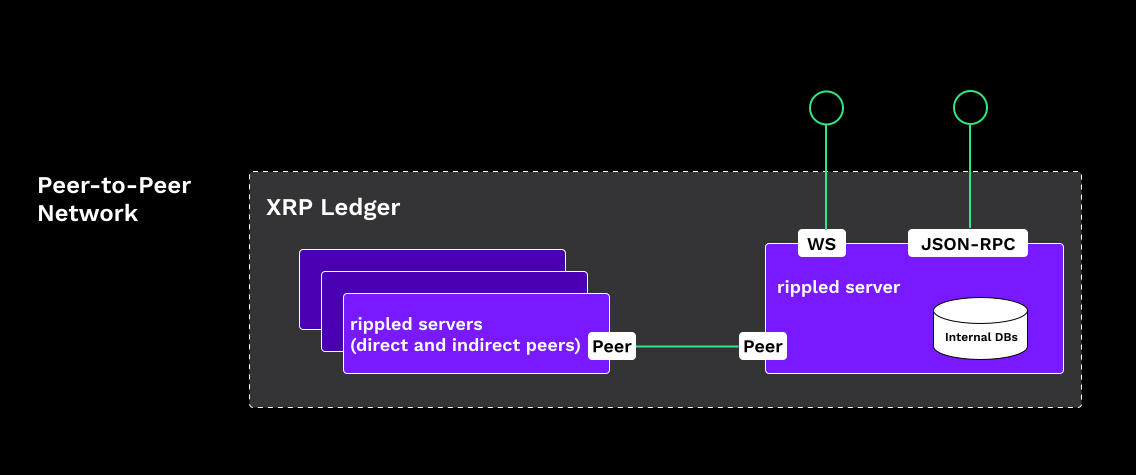
Every core server syncs to the same network (unless it's configured to follow a test network) and has access to all communications across the network. Every server on the network keeps a complete copy of the latest state data for the entire XRP Ledger, along with recent transactions and a record of the changes those transactions made, and every server processes every transaction independently while verifying that its outcome matches the rest of the network. Servers can be configured to keep more ledger history and to participate in the consensus process as a validator.
Core servers expose HTTP / WebSocket APIs for users to look up data, administer the server, and submit transactions. Clio servers also serve HTTP / WebSocket APIs but they don't connect directly to the peer-to-peer network and don't process transactions or participate in consensus. These servers rely on a core server in P2P mode to process transactions.
Client Libraries
Libraries simplify some of the common work of accessing the XRP Ledger, usually through the HTTP / WebSocket APIs. They convert the data into forms that are more familiar and convenient for various programming languages, and include implementations of common operations.
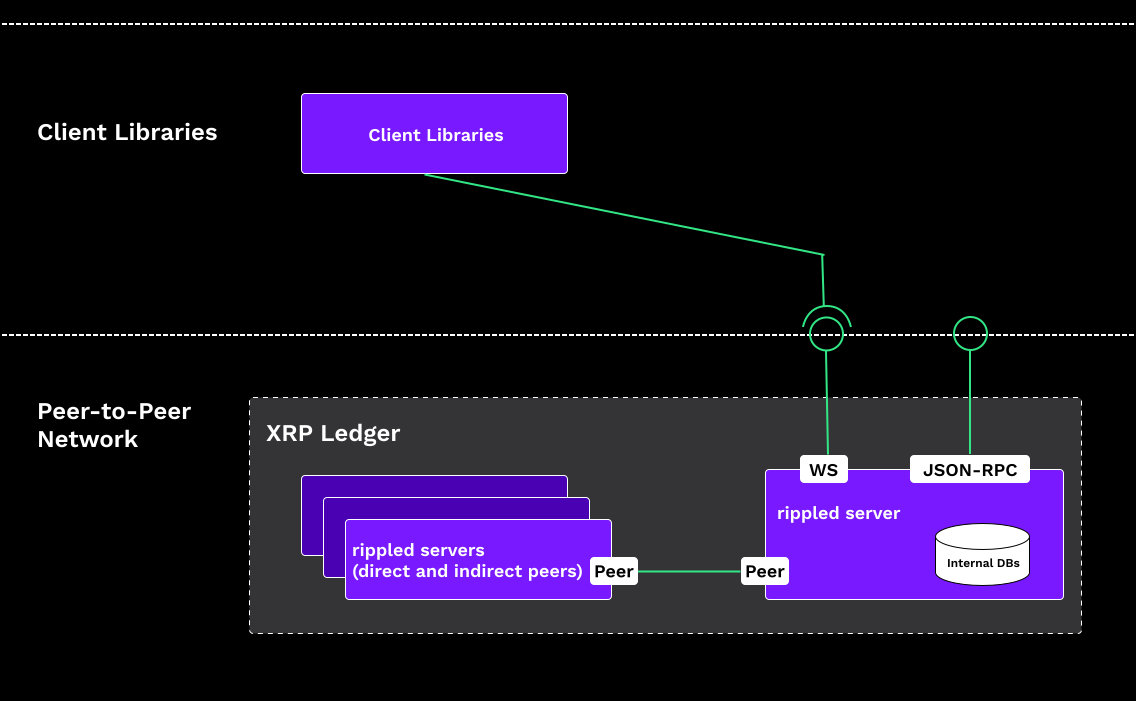
One core feature of most client libraries is signing transactions locally, so users never have to send their private key across any network.
Many middleware services use client libraries internally.
See Client Libraries for some information about currently available client libraries.